02 October 2026 — Ramzi Chamat
Geneva: Le Mervelet and electric mobility at the heart of real estate


Two official updates are capturing the attention of real estate professionals in Geneva this October 2, 2026: the State Council's stance in favor of easier access to electric charging in buildings and the publication of a new information document on the Mervelet district project in Petit-Saconnex.
These matters directly concern the design of residential projects, investments in existing properties, and the analysis of land potential. However, they are currently at different stages: the first announcement concerns a federal consultation; the second is preparing for a public inquiry regarding urban planning.
Electromobility: Geneva supports easier access to charging in buildings
What the September 30, 2026, press release states
In its weekly press release on September 30, the State Council indicated that it has responded favorably to a consultation from the Federal Department of the Environment, Transport, Energy and Communications (DETEC) regarding an amendment to the Federal Energy Act.
The project aims to facilitate the charging of electric cars in residential buildings. At the request of a resident with a parking space, the owner could be required to carry out the basic installation necessary for a charging station, provided that this requirement remains reasonable and proportionate.
This is therefore not the announcement of a new cantonal obligation that came into force on September 30. The press release outlines Geneva's support for a federal project currently under consultation. It does not, on its own, allow one to conclude that a tenant already has a new, immediately applicable right on this basis.
The two improvements requested by Geneva
First, the State Council proposes to clarify what can be "reasonably imposed" on an owner. It wishes for technical feasibility, cost, and heritage protection to be taken into account in order to strengthen legal certainty.
It then requests that the measure be extended to all tenants with a parking space, including those of commercial and artisanal premises, in order to also promote the electrification of professional fleets. This extension is a Genevan proposal, not a provision whose adoption is guaranteed.
The cantonal government presents this development as a way to remove a major barrier to electromobility and recalls, in its press release, that more than 90% of the Geneva population are tenants. It aligns its position with the Electromobility Strategy 2030 and the cantonal policy combining subsidies with obligations for the pre-equipping of residential buildings.
For new projects: anticipating the infrastructure, not just the charging stations
For a developer, the subject goes beyond installing a few charging stations upon delivery. It concerns the electrical architecture of the parking garage, cable routing, capacity reserves, metering, and the ability to progressively equip more spaces.
It is necessary to distinguish pre-equipping, which prepares the infrastructure, from the charging station that is actually installed and usable. This distinction must be reflected in the technical specifications, the budget, and the marketing documents: a pre-equipped space is not necessarily delivered with an operational charging service.
Technical analysis should notably cover:
- the available power and the potential need for strengthening the connection;
- centralized charging management and power distribution among users;
- compatibility with other electrical uses in the building;
- the possibility of expanding the installation without redoing the entire parking garage;
- maintenance, operating, and billing costs.
The obligations effectively applicable remain to be verified for each project, depending on its authorization and the regulatory framework in force. The federal consultation does not replace this verification.
For existing properties: preparing a coherent investment program
For owners of rental properties and investors, the signal is one of a growing need to adapt parking facilities. A case-by-case response may seem economical at first, but may become less relevant if it leads to multiplying installations that are incompatible or difficult to manage.
A diagnostic of the portfolio allows for prioritizing interventions based on occupant demand, the condition of the installations, and work already scheduled. Coordination with electrical or energy renovations can avoid certain consecutive interventions and facilitate budgetary planning.
A support mechanism already exists in Geneva. The cantonal page dedicated to the pre-equipping of collective parking facilities specifically targets residential buildings with at least five dwelling units whose building permit dates back to before 2023. It provides for technical and administrative conditions, including a minimum of five electrified spaces and centralized charging management.
Important practical note: the application must be submitted at least one day before the start of work. The Canton specifies that work commenced before a decision is taken is done so without any guarantee of a subsidy. Costs related to increasing the building's power capacity are excluded from this mechanism. Eligibility and conditions must therefore be confirmed before including any aid in a financing plan.
Enhancement of parking facilities and operation of condominiums (PPE)
The ability to charge a vehicle can increase the utility and attractiveness of a parking space. However, it does not justify an automatic valuation premium: this depends on local demand, the rates offered, operating costs, and the terms of access to the service.
In condominiums (PPE), the specifications and operational rules must clarify the ownership of the infrastructure, the necessary decision-making processes, the allocation of common and individual costs, electricity billing, and the procedures for equipping future users.
Our interpretation: charging must be treated as a matter of long-term design and property management, rather than as a mere parking accessory.
Mervelet: a concrete preparatory stage before the public inquiry
A new official document published on October 1st
The Office of Urban Planning published the leaflet "Le Mervelet, un quartier en évolution" (Mervelet, a neighborhood in evolution) on October 1, 2026. It presents the project in Petit-Saconnex within the framework of developing the local neighborhood plan (PLQ) at Avenue du Bouchet and accompanies the discussions scheduled prior to its submission for public inquiry.
The sector in question is located between Avenue du Bouchet, Avenue du Mervelet, and Chemin Charles-Georg. The revision of the project seeks, in particular, to preserve as many trees as possible and to improve the urban, landscape, and heritage integration of the future neighborhood.
This publication marks a useful milestone for land monitoring. It constitutes neither the adoption of the new PLQ, nor a building permit, nor, on its own, the opening of the public inquiry.
The orientations presented by the Canton
The cantonal fact sheet describes a revised project comprising four building clusters ranging from six to nine levels, approximately 170 housing units, and 50 underground car parking spaces. It also mentions a daycare center, a youth center, a "Jardin Robinson" (adventure playground), areas favorable to biodiversity, and active ground floors.
These elements are those of the project presented at this stage. They must be cross-referenced with planning documents and their evolution during the procedure; they should not be equated with definitively acquired building rights.
Two public meetings on October 7 and 8
The Office of Urban Planning is organizing two exchange sessions, open to all, at the Villa Dutoit, Chemin Gilbert-Trolliet 5 in Geneva:
- Wednesday, October 7, 2026, from 11:30 a.m. to 2:30 p.m.
- Thursday, October 8, 2026, from 6:00 p.m. to 8:00 p.m.
Access is free and open to all. The meetings are intended to allow participants to discover the project and, in particular, to consult the plan, the regulations, the explanatory report, the territorial energy concept, and the plan and charter relating to exterior landscaping.
The official announcement anticipates a 30-day public inquiry in the autumn. Following this, the Office of Urban Planning will examine any observations before finalizing the project, then transmitting it to the Geneva Municipal Council for its opinion, before the continuation of the procedure.
The cantonal fact sheet indicates a target date for the adoption of the PLQ in 2027 and the delivery of the housing units envisioned for 2030. These dates constitute a provisional schedule and not a guarantee of completion.
What a developer or investor should monitor
For a professional, the interest of this phase lies in being able to analyze the project before its parameters are definitively set. The main points of vigilance are:
- Constructible potential: site placement, dimensions, zoning, and the connection between the various parcels.
- Landscape and heritage constraints: preserved trees, outdoor spaces, and the impact on the organization of the buildings.
- Mobility: parking, access, service, and consistency with planned uses.
- Energy: guidelines for the territorial energy concept and their consequences for building design.
- Operational feasibility: phasing, land coordination, facilities, and implementation costs.
- Schedule risk: observations, potential adjustments, subsequent decisions, and authorizations still required.
The phrase "acceleration of the project" must therefore be understood as a transition to a more concrete preparatory stage, and not as confirmation of an imminent start to construction.
Key takeaways for real estate strategy
The two news items illustrate the same challenge: anticipating technical and regulatory changes without mistaking a favorable signal for a definitively applicable decision.
For electromobility, the priority is to evaluate existing installations, plan for scalable infrastructure, and monitor the outcome of the federal consultation. For Le Mervelet, it consists of examining the PLQ documents, participating in discussions, and monitoring the official public inquiry notice.
For OAKS GROUP SA, this monitoring helps put future costs, quality of use, and project implementation conditions into perspective. Documented anticipation is more useful than a valuation hypothesis based on an isolated announcement.
Official sources
- Council of State — press release of September 30, 2026, "Recharging electric vehicles: yes to facilitated access in buildings".
- Canton of Geneva — subsidies for pre-equipping collective parking in structures.
- Urban Planning Office — leaflet "Le Mervelet, a neighborhood in transition", published on October 1, 2026.
- Urban Planning Office — discussion sessions on the Le Mervelet project, October 7 and 8, 2026.
- Canton of Geneva — project sheet for Genève-Petit-Saconnex – Mervelet and provisional schedule.
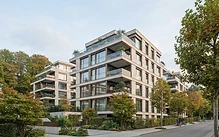
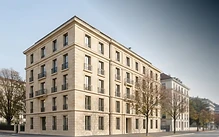
Monitoring concluded on October 2, 2026. The real estate consequences presented are an editorial analysis; they do not replace the legal and technical examination of each file. Cover illustration generated by AI, without representation of the actual Le Mervelet project.