05 October 2026 — Ramzi Chamat
Geneva Real Estate Market 2026: Analysis and Outlook
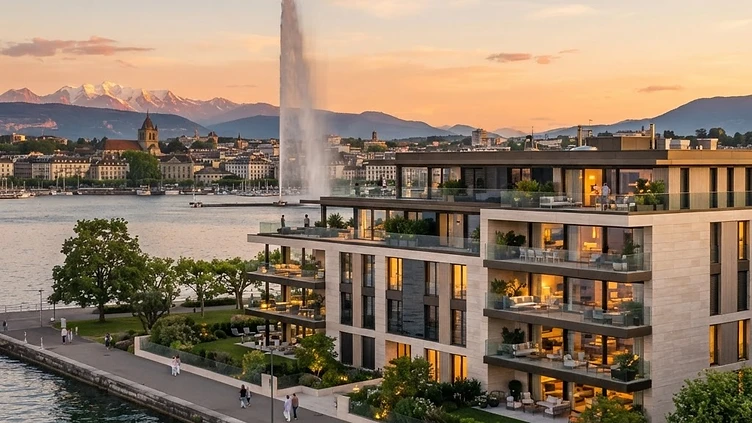

The Geneva real estate market continues to demonstrate remarkable resilience as we move through late 2026. Despite a complex global economic environment, demand for high-quality property remains significantly higher than available supply, maintaining constant pressure on both purchase prices and rental costs across the canton. As experts in real estate development and promotion, OAKS GROUP observes a dynamic where land scarcity and stringent regulatory requirements dictate the pace of transactions.
Geneva Real Estate Market: Prices and Transactions in 2026
The Geneva market is distinguished by some of the highest price levels in Switzerland. According to consolidated data from September 2026, the median price for houses in Geneva stands at 14,054 CHF/m², with market ranges extending from 8,432 CHF/m² to 19,676 CHF/m². This upward trend, observed since early 2022, marks a 12.32% increase over the period for single-family homes. Regarding condominiums (PPE), mid-2026 market analyses indicate an annual growth of approximately 2.6%. These figures confirm that Geneva real estate remains an essential safe-haven asset for investors and buyers.
Rental Tension: A Structural Challenge
The Geneva rental market remains characterized by a chronic housing shortage. Cantonal rental statistics emphasize the importance of monitoring monthly price developments per m² based on construction eras and property types. With a historically low vacancy rate, competition for every unit brought to market is intense. For owners and investors, this situation guarantees stable rental income, although the Geneva legal framework—notably the LDTR—requires rigorous management and a deep understanding of rent-setting mechanisms.
Supply Dynamics and Development Zones
The canton's development strategy relies on meticulous planning of development zones. The scarcity of buildable land compels developers to prioritize qualitative densification. OAKS GROUP focuses on projects that respect Geneva's architectural identity while integrating the strictest energy standards. The ability to transform underutilized plots into modern living spaces has become the primary lever for meeting the growing demand for new housing while respecting sustainability imperatives.
Taxation and Economic Environment
Geneva's tax system, while specific, remains a key element in purchase or investment decisions. Investors must integrate local fiscal parameters into their yield calculations. Simultaneously, economic indicators show that despite fluctuations in the tertiary sector, real estate remains a pillar of the Geneva economy. The stability of the legal framework and the strength of Swiss financial institutions continue to reassure market participants.
Key Takeaways
- The median price for houses in Geneva reached 14,054 CHF/m² in September 2026.
- Condominium (PPE) prices have seen a 2.6% increase over the last 12 months.
- The housing shortage maintains strong rental tension, supporting stable yields.
- Qualitative densification is the strategic response to land scarcity.
Frequently Asked Questions
What is the current price trend in Geneva?
Prices continue to show an upward dynamic, with a 12.32% increase for houses since 2022 and consistent growth for condominiums.
Why is it difficult to find housing in Geneva?
The market suffers from a structural shortage of housing, exacerbated by high demand and supply limited by the scarcity of buildable land.
How does OAKS GROUP approach the Geneva market?
OAKS GROUP prioritizes the development of high-quality real estate projects, focused on sustainable densification and compliance with Geneva's architectural and energy standards.
Sources
- OCSTAT, Cantonal Statistics, 2026.
- Federal Statistical Office (FSO), Swiss Residential Property Price Index (IMPI), July 2026.
- ImmoScout24, Real estate prices in Geneva, September 2026.
- Millenium Properties, Geneva Real Estate Market Analysis, 2026.