
22 October 2026 — Ramzi Chamat
Swiss Mortgage Rates: Market Update for October 2026
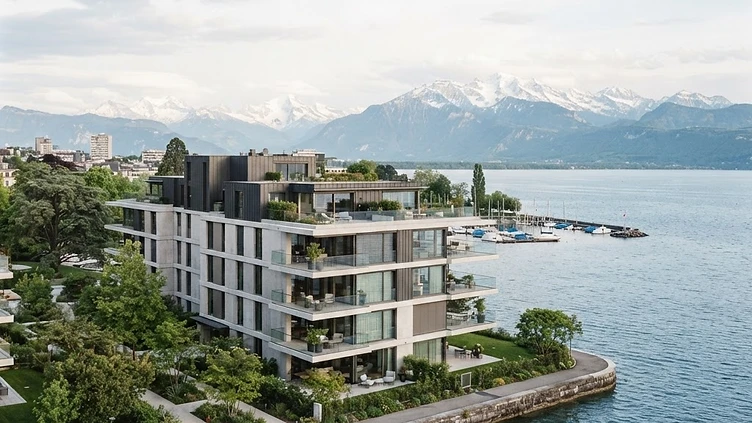

In October 2026, the Swiss financial landscape is defined by stability in monetary policy, contrasting with the dynamics observed in capital markets. For stakeholders in the Geneva real estate market, this situation requires a precise understanding of interest rate mechanisms to secure any acquisition or development project.
The Stability of the SNB Policy Rate
During its review on 24 September 2026, the Swiss National Bank (SNB) confirmed the maintenance of its policy rate at 0.0% [4, 8]. This decision aims to keep inflation within the range of price stability, which is estimated at 0.8% for 2026 [4]. This monetary policy supports economic activity while providing short-term visibility on financing conditions [4].
SARON Mortgages vs. Fixed Rates: A Notable Divergence
It is essential to distinguish between the two primary financing models in the current context:
- SARON Mortgages: Directly correlated to the policy rate, they remain highly competitive. As of 15 October 2026, the SARON stood at -0.05% [7]. This model offers total transparency, although it exposes the borrower to immediate volatility in the event of a rise in policy rates [6].
- Fixed-Rate Mortgages: Unlike the policy rate, fixed rates have seen a progression during the third quarter of 2026, driven by bond markets and bank refinancing costs [8]. On 19 October 2026, the average indicative rate for a 10-year fixed mortgage was 2.01% [1].
This decorrelation is explained by the fact that long-term rates incorporate financial market expectations and international geopolitical uncertainties, independent of the SNB's immediate monetary policy [8].
Impact on Buyers and Investors
For buyers in Geneva, this evolution of fixed rates marks a normalization after a period of floor rates [1]. Banking institutions maintain rigorous solvency criteria, including stress tests based on a theoretical rate of 5% [6]. This prudence ensures the stability of the Swiss banking sector but requires buyers to prepare their financial dossiers rigorously [6].
For investors, the rise in long-term rates influences the cost of credit. The profitability of real estate assets now depends more on the intrinsic quality of the property, its location, and its energy performance than on the low cost of financing alone [6].
Financing Strategies in 2026
Faced with this volatility, OAKS GROUP's strategy prioritizes personalization. The choice between SARON and a fixed rate must result from an analysis of individual risk capacity and the asset's holding horizon.
- Security: The fixed rate allows one to lock in charges over the long term, protecting against a rise in policy rates.
- Flexibility: The SARON remains advantageous in a low-rate environment but requires sufficient financial capacity to absorb a potential increase in monthly payments.
Key Takeaways
- The SNB policy rate has been maintained at 0.0% since June 2025 [3, 7].
- 10-year fixed rates have oscillated around 2.0% since the beginning of 2026 [8].
- The SARON remains a competitive option but is sensitive to future SNB decisions [6].
- The rigor of banking criteria (20% equity, 5% theoretical rate) ensures the stability of the Swiss real estate market [6].
Frequently Asked Questions
Why are fixed rates rising while the SNB maintains its rate at 0%?
Fixed rates depend on the yields of Confederation bonds and international financial markets, which incorporate risk premiums related to global economic uncertainty, regardless of the SNB's internal monetary policy [8].
Is it better to choose a SARON mortgage in 2026?
The choice depends on your risk tolerance and financial capacity. The SARON is advantageous in a low-rate environment, but it exposes the borrower to an immediate increase if the policy rate rises, unlike a fixed rate which secures your charges over the long term [6].
What is the impact of this situation on real estate demand in Geneva?
Demand remains supported by Geneva's structural attractiveness, but the rise in fixed rates and bank selectivity require buyers to prepare their financing dossiers rigorously to maintain their purchasing power [6].
Sources
- [1] RealAdvisor, Mortgage rates in Switzerland, 19 October 2026 (https://realadvisor-finance.ch/fr/taux-hypotheque)
- [3] Swiss National Bank (SNB), Current interest and exchange rates, 20 October 2026 (https://www.snb.ch/fr/the-snb/mandates-goals/statistics/statistics-pub/current_interest_exchange_rates)
- [4] Swiss National Bank (SNB), Quarterly Bulletin 3/2026, 19 October 2026 (https://www.snb.ch/fr/publications/quarterly-bulletin/2026/quartbul_2026_3_komplett)
- [6] OFFER, Mortgage rates 2026: what impact on prices, 17 October 2026 (https://offer.immo/blog/taux-hypothecaires-2026)
- [7] Swiss National Bank (SNB), Interest and exchange rates, 16 October 2026 (https://www.snb.ch/fr)
- [8] Swiss National Bank (SNB), Quarterly Bulletin 3/2026, 30 September 2026 (https://www.snb.ch/public/asset/fr/www-snb-ch/publications/quarterly-bulletin/2026/quartbul_2026_3_komplett/publications0_fr/quartbul_2026_3_komplett.fr.pdf)