03 October 2026 — Ramzi Chamat
Buying Property in Geneva: Your 2026 Budget and Strategy Guide

Buying Property in Geneva: Your 2026 Budget and Strategy Guide
The Geneva real estate market remains one of Europe's most distinctive, anchored by its international status and a structural scarcity of land. For those looking to become homeowners, understanding where to buy property in Geneva requires more than just geographic preference; it demands a clear assessment of your financing capacity and the evolving dynamics of the canton's residential hubs. Despite economic uncertainties, the market shows resilience, supported by solid local fundamentals and sustained demand [1, 10].
Market Overview: Price per Square Metre in 2026
As of late 2026, the landscape of property prices in Geneva reflects a significant segmentation between the urban core, prestigious lakeside communes, and emerging residential areas. While figures vary by property type and condition, the entry ticket remains substantial [4, 10].
- The City Centre and Prestige Districts: Areas such as Champel and the Eaux-Vives maintain high valuations, often exceeding CHF 16,500/m² [4, 10].
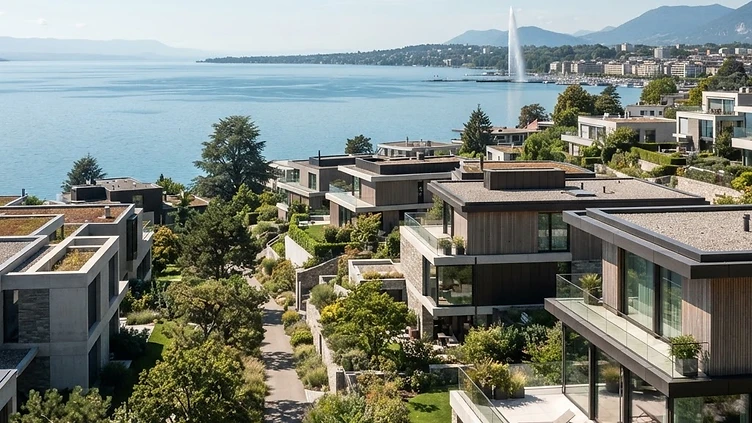
- Lakeside Communes: Prestige locations like Cologny and Vandoeuvres continue to trade at trophy levels, frequently surpassing CHF 28,000/m² [10].
- Dynamic Peripheral Communes: Districts such as Lancy, Chêne-Bourg, and Vernier offer a more accessible price-to-surface ratio. These areas benefit from enhanced connectivity, particularly via the Léman Express, making them strategic choices for families and investors [10].
Recent data indicates that the average property price in the city of Geneva sits near CHF 15,761 to CHF 16,500 per square metre, depending on the specific segment and data source [2, 10].
Strategies to Optimize Your Real Estate Acquisition
Success in the Geneva market requires a combination of financial optimization and long-term planning.
- Leverage the Casatax Incentive: For primary residences, the Casatax scheme is a vital lever. As of March 1, 2026, for purchases under the price cap of CHF 1,394,928, buyers benefit from a maximum transfer duty allowance of CHF 20,924 and a 50% reduction in mortgage note duties [9].
- Target Transformation Zones: Areas undergoing urban redevelopment, such as the PAV (Praille-Acacias-Vernets) project, offer potential for capital appreciation. Investing in neighborhoods in transition is often a prudent strategy for long-term value [10].
- Anticipate Total Acquisition Costs: Beyond the purchase price, factor in acquisition costs—typically around 4% in Geneva—which include notary fees and transfer duties [7, 9]. Remember that these costs must generally be covered by your own liquid funds [9].
The Impact of Infrastructure on Value
Accessibility remains the primary driver of property value in Geneva. The expansion of the Léman Express has effectively redrawn the canton's real estate map. Locations previously considered peripheral are now strategic hubs, with proximity to rail infrastructure becoming a top priority for both families and institutional investors [10].
Key Takeaways
- The Geneva market is characterized by high demand and limited supply, keeping prices stable [1, 10].
- Strategic location selection is essential; prioritize areas with strong public transport links [10].
- Utilize the Casatax incentive if your purchase falls within the 2026 threshold of CHF 1,394,928 [9].
- Always account for the ~4% in additional acquisition costs when calculating your total budget [7, 9].
Frequently Asked Questions
What is the minimum budget to buy in Geneva in 2026?
While there is no absolute minimum, standard residential transactions typically range from CHF 900,000 to over CHF 3.5 million. To qualify for the Casatax reduction, the purchase price must not exceed CHF 1,394,928 [9].
Is now a good time to buy property in Geneva?
Despite global economic fluctuations, the Geneva market is supported by strong local demand and a chronic shortage of housing. For many, property remains a stable long-term asset for wealth preservation [1, 10].
What are the hidden costs of buying a home?
Beyond the sale price, you must budget for approximately 4% in acquisition costs, covering notary fees and cantonal transfer duties. These costs are not typically financed by mortgage lenders [7, 9].
Sources
- KPMG Switzerland: Real Estate Investment Market Study 2026 [1].
- RealAdvisor: Property price analysis for Geneva, September 2026 [2, 8].
- Neho: Switzerland Real Estate Market Trends 2026 [4].
- Nessell: Casatax 2026 conditions and allowances [9].
- The Luxury Playbook: Geneva Real Estate Market Overview 2026 [10].