19 June 2025 — Ramzi Chamat
SNB policy rate at 0% in June 2025: what it means for mortgages

Context: the SNB decision of 19 June 2025. The announced 0% policy rate took effect on 20 June 2025, according to the official SNB statement in French. This was not an offer of a 0% mortgage: mortgage pricing includes market conditions and the lender’s margin. This article discusses June 2025, not today’s available loan offers.
On June 19, 2025, the Swiss National Bank (SNB) lowered its key interest rate to 0%—a widely anticipated but highly significant decision. It marks the sixth consecutive cut since March 2024. In a climate marked by negative inflation, a slowing economy, and a strong Swiss franc, this move is reshaping investment prospects across Switzerland. For those considering homeownership, the timing couldn’t be better.
Introduction
The evolution of interest rates has a direct impact on the real estate market. After a phase of post-pandemic monetary tightening, central banks are now returning to more accommodative policies. In Switzerland, this translates into a gradual return to extremely low rates. For households and investors, this situation creates a rare opportunity: to purchase property with historically low borrowing costs.
In a country where access to homeownership remains a major issue, this monetary shift can make the difference between postponing a project and making it a reality.
1. Key interest rate at 0%: a strategic decision by the SNB
On June 19, 2025, the Swiss National Bank decided to lower its key interest rate by 25 basis points, bringing it down to 0.00%. This is a strategic move, driven by several economic factors:
Inflation has entered negative territory (−0.1% in May),
The Swiss franc has appreciated significantly, impacting exports,
Economic growth remains modest amid global uncertainty.
In response, the SNB is acting cautiously yet decisively. It maintains the option for further interventions and does not rule out a return to negative rates if deflation deepens.
2. The policy rate and the actual cost of a mortgage
A policy rate cut may influence financing without immediately lowering every mortgage rate by the same amount. A SARON mortgage depends on the compounded reference rate, the lender’s margin and contractual terms, including any interest-rate floor. Fixed mortgage rates also reflect market expectations and the loan term.
A zero policy rate therefore means neither a free loan nor automatic approval. Equity, income and affordability under higher-cost assumptions still matter; variable-rate borrowing does not guarantee constant payments.
3. Real estate: a safe haven in an uncertain world
Market volatility, geopolitical tensions, and near-zero savings rates have reshaped investors' priorities. Residential real estate is once again central to wealth management strategies.
In Switzerland, real estate offers several key advantages:
Strong demand in urban areas,
A stable and protective legal framework,
A controlled supply due to land scarcity and regulatory constraints.
Buying property today means investing in a tangible asset, less exposed to economic shocks and capable of retaining its value over time.
4. Becoming a homeowner today: an informed choice
The current environment combines three rarely aligned factors:
A 0% SNB policy rate, distinct from the mortgage rate charged,
Low and predictable inflation,
A resilient and regulated real estate market.
For prospective homeowners, this represents a unique opportunity to take the leap, with financing conditions that align with their best interests. It's also the right time to transition from renting to owning in regions with high rents, allowing for better monthly budget optimization while building personal wealth.
Conclusion
The June 2025 decision eased Swiss monetary policy, but it guaranteed neither a particular mortgage rate nor the continuation of favourable conditions. Financing costs and risks depend on the contract, the term and the borrower’s circumstances.
However, this context won't last forever. Economic cycles change, and interest rates could rise again as soon as global growth or inflation picks up. That’s why acting now—with clarity and proper guidance—is a strategic decision.
Becoming a homeowner in 2025 is not just an achievable dream: it's an act of confidence in the future.
Discover EDEN 25 – A haven of peace in the heart of Vandoeuvres
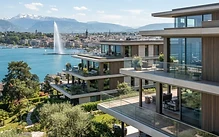
OAKS GROUP is proud to present EDEN 25, an exclusive development of 4 high-end apartments, HPE-certified, nestled in one of Geneva’s most sought-after neighborhoods.
Combining contemporary architecture, modern comfort, and a green environment, EDEN 25 is an invitation to live differently.
➡️ Visit the site: www.eden25.ch 📞 Direct contact: +41 79 204 21 14 / mb@oaks.ch
A rare project for discerning buyers.
Ramzi Chamat OAKS GROUP SA
FAQ – 0% Interest Rates in Switzerland and Real Estate Opportunity
What are the advantages of a 0% key interest rate for property buyers in Switzerland?
A lower policy rate can help reduce some financing costs. Transmission depends on the mortgage type and contract; it guarantees neither a 0% loan nor an increase in borrowing capacity.
Will mortgage rates stay low for long?
Rates could remain low as long as inflation is under control and the Swiss economy remains in a slowdown. However, economic cycles evolve, and rates may rise again in the medium term. It’s wise to take advantage of current conditions.
Is real estate a safe investment in a low-rate environment?
No, low rates do not make a property purchase risk-free. Property value, maintenance, liquidity, debt and possible interest-rate increases all need to be considered.
What is the difference between the key interest rate and mortgage rates?
The key interest rate is set by the Swiss National Bank and influences banks’ refinancing conditions. Mortgage rates are applied by lenders and are usually influenced by the key rate and overall market conditions.
Why buy now instead of renting?
With very low interest rates, buying can be more financially advantageous than renting—especially in regions with high rental prices. It’s also a way to build lasting personal wealth.