04 November 2026 — Ramzi Chamat
LDTR Renovation in Geneva: A Practical Guide and Rent Control
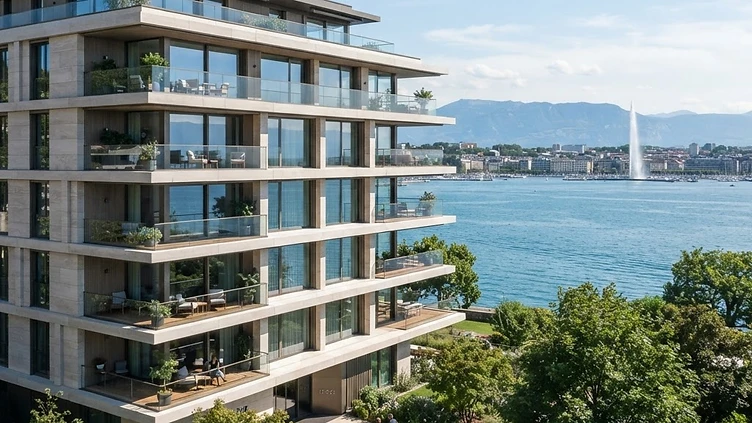

In Geneva, the Law on Demolitions, Transformations, and Renovations of Residential Buildings (LDTR) is a cornerstone of local housing policy. For any owner or investor, understanding the obligations imposed by this law is essential to securing a renovation project. At OAKS GROUP SA, we observe that the distinction between routine maintenance and work subject to authorization is often the primary source of administrative bottlenecks.
Understanding the Scope of the LDTR
The LDTR subjects any transformation or renovation of a dwelling to authorization under Art. 3 para. 1 LDTR. While routine maintenance is generally not concerned, any intervention modifying the comfort or structure of the property may be classified as a renovation. Geneva jurisprudence examines the nature, scope, cost, and impact of the work on the rent to determine if an authorization is required.
In case of doubt, filing a request with the Office of Building Authorizations (OAC) is the only way to avoid administrative sanctions. Authorization is required from the outset, regardless of the property's occupancy status.
Authorization Procedures and Timelines
Submitting a building permit application is an essential preliminary step. Geneva offers two main pathways:
- The ordinary definitive application (DD): the legal deadline is 60 days.
- The accelerated procedure authorization (APA): the deadline is reduced to 30 days for projects meeting specific criteria.
It is crucial to anticipate these timelines in your work schedule. An authorization obtained late can delay the start of construction and impact the profitability of the operation.
Rent Control After Renovations
One of the most structural aspects of the LDTR is the control of rents following the completion of works. When authorization is granted, the department sets the maximum admissible rent to ensure that renovated housing meets the prevailing needs of the population (BPP).
The duration of this control varies based on the nature of the work:
- 3 years for a simple renovation.
- Up to 5 years for a heavy transformation.
The post-renovation rent calculation accounts for a fair return on the capital invested in the works. This return is generally calculated on a maximum of 70% of the cost of the works, rented at a rate 0.5 percentage points above the first-rank mortgage interest rate practiced by the Banque Cantonale de Genève. Once the control period expires, owners regain the freedom to set rents according to market conditions, subject to private law provisions.
Criteria for Rent Setting
The department ensures that transformed dwellings meet the prevailing needs of the population. The post-renovation rent must not exceed a ceiling set by the State Council, which is periodically revised based on the evolution of the median gross fiscal income of taxpayers. This approach ensures social coherence but requires investors to perform rigorous financial modeling before launching works.
Key Takeaways
- Any renovation exceeding routine maintenance requires an LDTR authorization.
- Authorization timelines range from 30 days (APA) to 60 days (DD).
- Rent control lasts 3 years for simple renovations and up to 5 years for heavy transformations.
- Post-renovation rent is capped to meet the prevailing needs of the population.
Frequently Asked Questions
Which works are subject to LDTR authorization?
All transformation or renovation works that modify the comfort or structure of a dwelling are subject to authorization. Routine maintenance, such as refreshing paint, is generally not concerned, but the distinction requires a case-by-case analysis.
How is the rent calculated after renovations?
The rent is set by the department, taking into account a fair return on the capital invested in the works. This return is calculated on 70% of the cost of the works, rented at a specific rate based on the BCGE first-rank mortgage interest, while respecting the LDTR ceiling.
Can the rent be increased after the control period?
Yes, at the end of the control period (3 or 5 years depending on the case), the owner is free to modify the lease agreement and set the rent according to market conditions. The LDTR does not allow the department to intervene in the rent after this control period.
Sources
- État de Genève, Logements répondant aux besoins prépondérants de la population : adaptation des loyers, 30 October 2025
- État de Genève, Déposer une requête en autorisation d’aliéner un appartement, updated 7 October 2026
- HILO Architecture, Permis LDTR Genève : procédure et délais 2026, updated 14 October 2026
- Cour de Justice du Canton de Genève, Arrêt A/783/2025-LDTR, 1 September 2026