19 November 2026 — Ramzi Chamat
Property Development in Geneva: 7 Steps from Plot to Keys

Buying off-plan or selling your land to a developer requires understanding how a property development in Geneva unfolds. Between the first visit to a plot and the handing over of keys, a project goes through seven steps, each with its own rules, risks and timelines.
This guide presents them in order, from the perspective of a property developer in Geneva, so that you know when to step in and what questions to ask.
Step 1: land, the starting point of every project
Everything starts with a plot. In Geneva, where buildable land is scarce, this step is often the longest. The developer analyses:
- the zoning: villa zone (zone 5), ordinary zone or development zone;
- building rights: in the villa zone, the reference floor area ratio is 0.25 under the LCI;
- constraints: easements, noise, protected trees, access, possible soil pollution;
- the residual value of the land, calculated from the future sale price of the homes.
The agreement with the owner often takes the form of a promise of sale conditional on obtaining a final building permit.
Step 2: designing the project
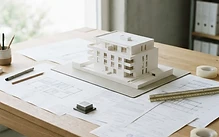
The developer appoints an architect and engineers to design a project that complies with the rules and meets market demand: types of homes, floor areas, energy performance, parking, outdoor spaces.
In a development zone, the project must in principle fit within a local neighbourhood plan (PLQ), which sets in particular the split between housing categories (condominium, rental, public-interest housing). In the villa zone, the LCI and the municipal master plan frame the project.
This phase is decisive: a well-designed project, discussed early with the municipality and neighbours, limits the risk of objections.
Step 3: the building permit
The permit application is filed with the Department of Territory and published in the Official Gazette (FAO). For 30 days, anyone may submit observations. The legal response time is 60 days excluding suspensions, but it is often longer in practice.
Once granted and published, a 30-day appeal period opens. The permit is only final after this period, or after any appeals have been definitively decided. Works cannot begin before then.
Step 4: marketing and off-plan sales
Most new homes are sold off-plan, before or during construction. The buyer reserves a unit, then signs a deed before a notary. The most common structures in Geneva are:
- the forward sale (vente à terme), where the buyer pays the price on handover;
- the purchase of a land share (quote-part de terrain) combined with a construction contract.
Each structure has its advantages and risks.
In a development zone, no deed of sale or promise may be signed before the provisional sale agreement (APV) issued by the cantonal housing office. Summary sales plans are then published by the Canton of Geneva for information.
Step 5: financing the project
A development commits large sums well before the homes are sold: land, fees, taxes, start of construction. The developer combines its own equity with bank construction financing. Banks generally require part of the homes to be reserved or sold before releasing funds, which explains the importance of off-plan marketing.
For the buyer, the key step is to obtain their own mortgage financing commitment before signing. Test your budget with our mortgage calculator.
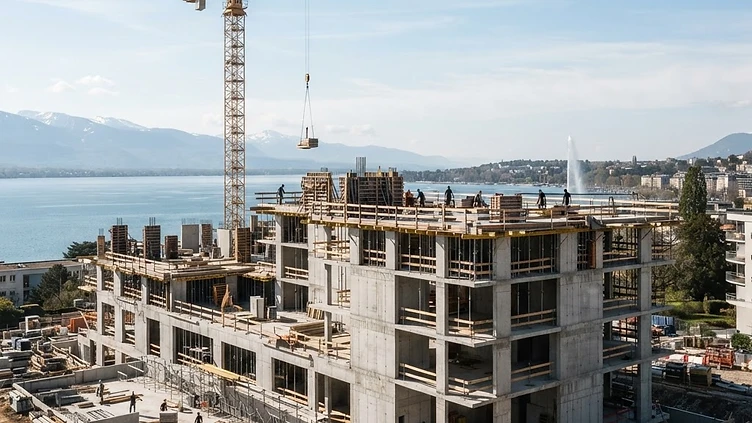
Step 6: construction
Once the permit is final and financing is in place, construction begins. It must start on time: a permit lapses if works are not started within two years of its publication, unless extended.
During this phase, off-plan buyers can often choose certain finishes from a defined catalogue. Major changes (partitions, technical installations) should be requested early and priced in writing.
Step 7: handover, condominium and warranties
Handover takes place during a joint acceptance inspection, with minutes listing any defects found. For an apartment, the condominium ownership (PPE) is constituted, with its regulations and owners' meeting.
Since 1 January 2026, Swiss law on construction contracts and property sales better protects buyers:
- a 60-day period to report defects in a building, whether visible or hidden, instead of a few days previously;
- a right to free repair of defects that can no longer be excluded by contract.
These rules apply to contracts concluded since 2026. Keep a written record of every defect notice.
How long does a development take in Geneva?
There is no standard duration. It depends on the size of the project, the zone, whether a PLQ exists and above all on any appeals. A small villa project in zone 5 with no objections moves much faster than an apartment building in a development zone challenged all the way to the Federal Supreme Court. A serious developer presents a realistic timeline and keeps it updated.
The OAKS GROUP view
At OAKS GROUP SA, we manage the entire chain, from land acquisition to handover. Our recent projects, such as DANAÉ N°26 in Pregny-Chambésy or OLYMPIA N°107 in Vésenaz, followed these seven steps. Our conviction: transparency at every step, especially on permit status and timeline, is what allows buyers and sellers to decide with confidence.
Key takeaways
- A property development in Geneva follows seven steps: land, design, permit, marketing, financing, construction, handover.
- The land sale is generally conditional on a final permit.
- In a development zone, nothing can be sold before the APV.
- Most new homes are sold off-plan, as a forward sale or a land share.
- Since 2026, buyers have 60 days to report a defect and a mandatory right to repair.
Frequently asked questions
When is it best to buy off-plan?
Buying early often lets you choose your unit and finishes, but the risk of delay is higher until the permit is final. Buying after the permit becomes final offers more certainty on timing, sometimes with less choice.
When is the landowner paid?
Generally at the final sale, once the conditions are met, in particular obtaining a final permit. A deposit may be paid on signing the promise, depending on what is negotiated.
What should I do if I discover a defect after handover?
Report it in writing to the seller or contractor within 60 days of discovery, in accordance with the law in force since 2026. Keep photos and correspondence, and check the terms of your contract.