
30 October 2026 — Ramzi Chamat
Editorial update :
Swiss housing: the hidden demand from households that cannot form
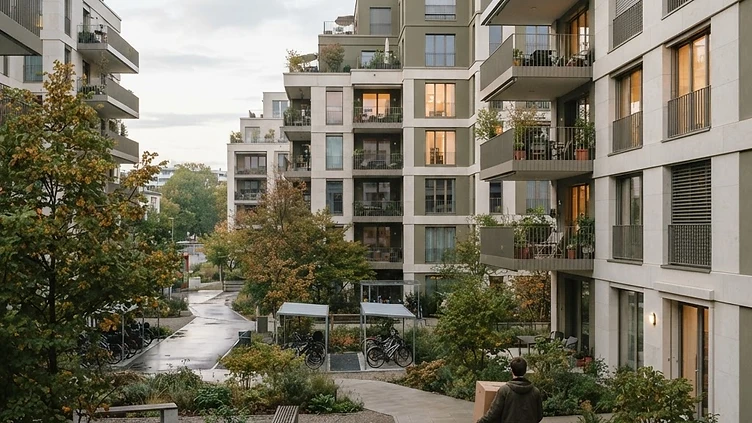

A missing home is more than a missing property listing. It can mean postponing a move out of the family home, delaying moving in with a partner or continuing to share accommodation because there is no suitable alternative. That demand exists even when it does not appear as an additional household in the statistics.
According to a Wüest Partner estimate reported by Le Temps on 29 October 2026, Switzerland would have recorded 20,000 to 30,000 additional households between 2023 and 2025 had household formation continued at the pace observed between 2013 and 2022. This is an estimate against a historical benchmark, not a count of rejected rental applications or people without a home.
It changes the question: alongside the number of households that moved into their own accommodation, how many would have liked to do so?
Needs can remain hidden without disappearing
Population and household numbers do not necessarily grow together. Two adults living with their parents are already included in the population. Moving into a separate apartment may create an additional household without adding a single resident to the country.
Consider a hypothetical example: someone has a job and wants to leave the family home but cannot find an apartment compatible with their budget and commute. Their plans do not produce a separate household while they remain with their parents. An accessible home could unlock that move; a property that is too expensive or too remote might not.
This distinguishes realised demand from latent demand. However, living with family or sharing accommodation should not automatically be interpreted as a constraint: both can also be deliberate choices.
More construction does not mean immediate relief
In the study covered by Le Temps, Wüest Partner forecasts a net increase in Switzerland’s housing stock of approximately 45,000 homes in 2026 and 50,000 in 2027. These are national forecasts, not completed deliveries or targets for Geneva.
Some of this additional supply could allow previously constrained households to form. Household numbers would then rise as accommodation becomes available. Comparing new construction only with recent household formation could therefore underestimate needs.
This does not diminish the value of building. Enabling a previously impossible move is itself a tangible improvement, even without an immediate fall in rents. Pricing effects will also depend on location, budgets, property characteristics and changes in demand.
In Geneva, assess accessibility rather than unit counts alone
The national estimate cannot establish how many households have been prevented from forming in Geneva. It does, however, suggest a useful framework for assessing residential development:
- Total housing costs: advertised rent or purchase price is only part of the decision; service charges and commuting costs matter too.
- The housing mix: size, layout and room count should match the needs of the intended occupants.
- Location: an available apartment far from employment or poorly connected to public transport offers a different everyday proposition.
- Timing: an intention to build does not yet meet the needs of someone looking for a home now.
A shortage should not be interpreted as proof that every property will attract an occupant at any price. The practical question is which households a project will actually enable to find housing, under what conditions and when.
What this perspective changes
Latent demand shows that statistics also reflect market constraints. Slower household formation does not necessarily mean people have less desire for independence or fewer residential needs.
A sound assessment considers existing households, postponed plans to move and future occupants’ financial capacity. Explore the Geneva residential developments presented by OAKS.
Source and scope
Original analysis based on Alexandre Beuchat’s article, “Pourquoi la pénurie de logements empêche des milliers de ménages de se former”, published in Le Temps on 29 October 2026. Wüest Partner estimates and forecasts are cited as reported in that article, without independent verification of the full study. Project implications are our analysis; the example is hypothetical. AI-generated illustration, not an actual development.
Frequently asked questions
Does the estimate of 20,000 to 30,000 households measure missing vacant homes?
No. It estimates a shortfall in household formation against a historical trend, not an inventory of vacant properties or a construction target directly applicable to each canton.
Can additional construction still improve conditions?
Yes. Homes suited to people’s needs and budgets can enable previously postponed moves, without necessarily causing rents to fall immediately.
Which indicator should guide a development decision?
No single figure is sufficient. Local demand, budgets, desired housing types, available properties and expected deliveries need to be considered together.