
20 November 2026 — Ramzi Chamat
Swiss Listed Real Estate Funds: Agio, Yield, and 2026 Market Trends
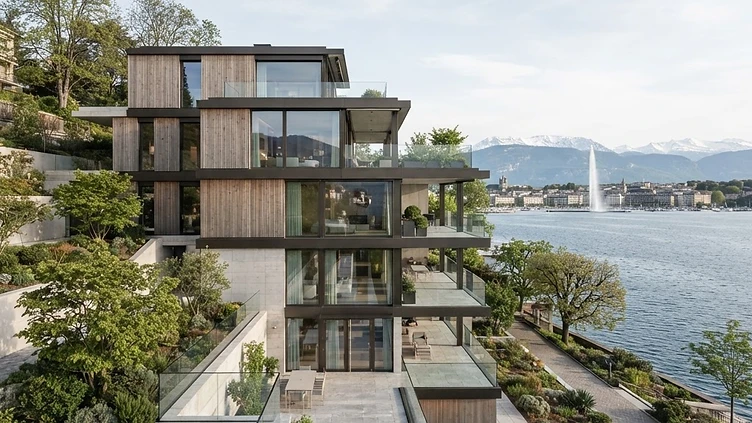

The Swiss listed real estate fund market experienced a year of consolidation in 2026, following years of market euphoria. For investors, understanding the dynamic relationship between the agio, yield, and the value of underlying assets is essential to decrypting the signals currently being sent by the stock market.
The Agio: An Indicator of Normalization
The agio, or premium, represents the difference between a fund's market price and its net asset value (NAV). By the end of October 2026, the average agio for Swiss real estate funds stood at 28.5%, a decline from the 38.2% observed in January 2026 [1, 3]. While this rate is in decline, it remains above the long-term average of just under 22% [1, 3].
It is crucial not to interpret the agio in binary terms. A high agio often reflects the market's valuation of a manager's ability to create future value—through vertical extensions, densification, or development projects—that is not yet fully integrated into the NAV [10].
Performance and Yield: A Mixed Year
2026 has been a contrasting year for indirect real estate investments. As of the end of October, the SWIIT index (listed real estate funds) posted a total performance of -1.5% year-to-date [1, 3]. This performance is significantly lower than in 2025, when it reached +9.7% [1, 3].
Several factors explain this investor caution:
- A shift in interest rate expectations, which reduces the relative advantage of real estate investments compared to bonds [1, 6].
- Uncertainty regarding the debate on tightening the "Lex Koller" regulations [1, 3].
- Intense activity in the primary market, with capital increases totaling several billion francs in the first nine months of 2026, which weighed on the relative performance of the assets [4, 7].
What Market Prices Reveal About Direct Real Estate
Listed fund prices act as a leading barometer. While listed real estate funds have lost momentum, the direct market remains supported by robust fundamentals: structurally high demand and limited supply, particularly in urban centers like Geneva [1, 8]. Due to their liquidity, indirect markets react more rapidly to macroeconomic uncertainties than the direct market, where transactions are slower and prices are less volatile.
Key Takeaways
- The average agio for listed real estate funds retreated to 28.5% at the end of October 2026, marking a return to a form of normalcy after the post-pandemic boom [1, 3].
- Total performance of listed funds remained negative for the first ten months of 2026 (-1.5%), contrasting with the solid fundamentals of the direct real estate market [1, 3].
- The agio should not be read as a simple price premium, but as a valuation of a fund's earnings capacity and future development potential [10].
- High capital increase activity in 2026 reflects sustained investor interest in the real estate sector, despite stock market volatility [4, 7].
Frequently Asked Questions
Why did the agio of real estate funds fall in 2026?
The decrease in the average agio, which moved from 38.2% in January to 28.5% in October 2026, is explained by a return to normal levels after a period of high euphoria [1, 3]. This retreat is also linked to the rise in bond yields, which makes fixed-income investments more competitive compared to real estate [1, 6].
Is the Net Asset Value (NAV) sufficient to evaluate a fund?
No, the NAV is a snapshot of assets at a specific moment, but it does not capture the potential for future value creation [10]. A fund may justify a high agio if it possesses densification reserves or development projects that have not yet materialized in its financial accounts [10].
What is the impact of capital increases on listed funds?
Capital increases allow funds to raise liquidity for new acquisitions, but their record multiplication in 2026 weighed on short-term stock performance [4, 7]. They demonstrate, however, the confidence of investors in the ability of managers to deploy this capital into profitable projects [7].
Sources
- Raiffeisen, Immobilier Suisse, 4e trimestre 2026, 11 novembre 2026
- Immoday, La consolidation s'est poursuivie pour les fonds immobiliers en septembre, 11 octobre 2026
- Allnews, Immobilier Suisse 4T 2026, 11 novembre 2026
- Immobilien Business, Correspondance Immobilière Romande, 23 septembre 2026
- Acanthe, Observatoire 2026, 4 novembre 2026
- MV Invest, Chronique immobilière octobre 2026, 6 novembre 2026
- Numea, Fonds immobiliers : la vague de levées de capitaux de l'automne 2026, 3 septembre 2026
- Edmond de Rothschild, Factsheet ERRES Swiss, 13 octobre 2026
- Immoday, En août, les fonds non cotés font mieux que les fonds cotés, 14 septembre 2026
- Alphaprop, Fonds immobiliers suisses et trajectoire CO2, 11 novembre 2026