
24 September 2026 — Ramzi Chamat
Geneva Real Estate: Understanding the Impact of Interest Rates in 2026
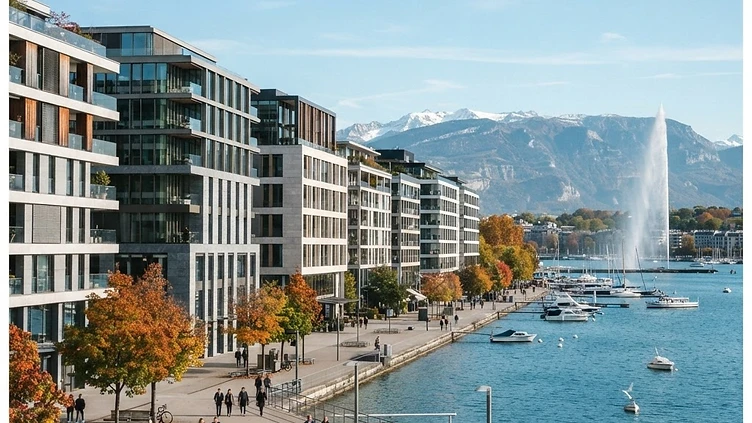
As of September 2026, the Geneva real estate market is operating within a unique monetary environment. While major international central banks are adjusting their policies in response to geopolitical tensions, Switzerland continues to confirm its status as a bastion of stability. For stakeholders in the Geneva real estate sector, this climate offers exceptionally clear financing prospects, though caution remains essential in the face of global uncertainties.
The SNB Strategy: An Anchor at 0%
The Swiss National Bank (SNB) is maintaining a clear course: the key interest rate is fixed at 0%, a decision confirmed during the latest communications in June 2026. This policy aims to preserve price stability in a context where inflation remains extremely subdued, with projections hovering around +0.3% for 2026 according to SNB data. For investors, this means that the cost of bank refinancing remains historically low, fostering continued fluidity in Geneva real estate transactions.
Fixed Rates vs. SARON: Which Strategy to Adopt?
The choice between a fixed rate and a SARON mortgage depends on your risk appetite and investment horizon:
-
Fixed Rates: These remain correlated with the yields of 10-year Confederation bonds, which stood at 0.496% as of September 4, 2026 (Source: SNB Data Portal). They offer total security against volatility.
-
SARON (Swiss Average Rate Overnight): Directly linked to the key interest rate, it is ideal for investors who anticipate prolonged stability in short-term rates and wish to benefit from the flexibility of the money market.
The Role of Cantonal and Major Banks
Cantonal banks, as pillars of local financing, continue to adopt a cautious yet competitive approach. Unlike large international banks that react sharply to external shocks, Swiss institutions prioritize the quality of the applications. Credit policy remains selective: self-financing capacity and the intrinsic quality of the property remain the deciding criteria for obtaining the best rate conditions, regardless of overall monetary policy.
Impact for Buyers and Investors
For buyers in Geneva, this low-interest environment is an opportunity, but it should not overshadow the reality of market prices. While the cost of debt is low, the scarcity of properties in the canton maintains pressure on valuations. Investors must therefore prioritize high-added-value assets capable of generating sustainable rental yields, while incorporating a safety margin into their financing plans to anticipate a potential normalization of rates in the medium term.
Key Takeaways
The Swiss real estate market in 2026 is characterized by rare monetary stability. With the key interest rate maintained at 0%, financing conditions remain attractive. However, investment strategy should be dictated by property quality and a long-term vision, rather than the mere pursuit of the lowest possible rate. Diversifying financing sources and conducting rigorous analysis of rental yields are the keys to success for any investor in Geneva.
Frequently Asked Questions
Will the SNB key interest rate increase soon?
Although some analysts mention a possible moderate hike in the course of next year, the SNB is currently prioritizing monetary stability to counter undesirable side effects on the economy.
Why is SARON often recommended?
SARON allows immediate access to money market conditions. It is particularly well-suited for investors who follow rate trends and desire total transparency regarding their credit costs.
What is the impact of the strong franc on my investment?
The Swiss franc remains a safe-haven currency. While its strength may weigh on exports, it maintains the purchasing power of local investors and stabilizes the cost of imports, which helps to contain real estate inflation.
Sources
- Swiss National Bank (SNB), Data Portal, September 2026.- Raiffeisen, Interest Rate Forecasts, September 2026.- Banque Cantonale Neuchâteloise (BCN), Economic News 2026.- VZ VermögensZentrum, Financial Market Analysis, August 2026.